“I’m a struggling writer, I’m struggling to convince people I’m a writer.” ― Tom Conrad
What does it mean to be a business owner?
If we take a relaxed approach, we can define the term “business” as efforts undertaken to produce and sell products. So, the business owner is the person(s) who owns and operates the business, with profit being one goal of a successful operation. The owner has deciding authority, can delegate tasks, manage resources, assume risk, and manage profit and losses.
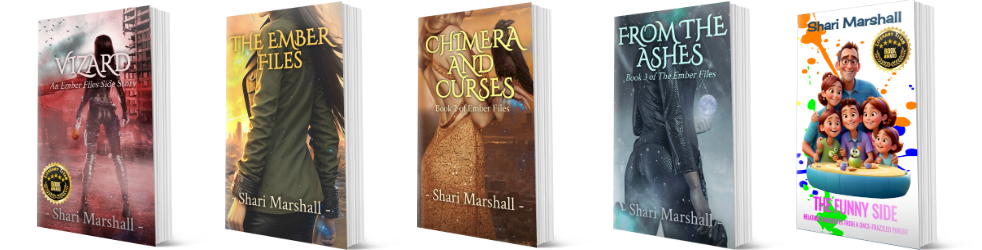
Indie authors, that is you. You are a small business owner. This wasn’t something I was prepared for when I launched my first novel. I wasn’t thinking about any of the processes as a business, but let’s consider:
- Indie authors write, publish, and sell their books.
- Profit or loss from book sales is theirs to absorb.
- Indie authors handle their own budgets.
- Indie authors make the final decisions about their novels.
- Indie authors can contract out editing, marketing, cover creation, blurb creation . . . and are therefore responsible for hiring those service providers as they see fit.
- Many Indie authors develop their own brands and imprints.
- Some Indie authors expand their writing business into other areas of the book world like coaching, editing, public speaking . . .
“To be professional, you need to be professional.” ― Jayelle Cochran

As a business owner, having a business plan can be a benefit. Your business plan can help you with all the points noted above. I took a freelance course through Simon Fraser University, earlier this year, and part of the learning included creating a business plan. My current plan starts out by asking personal questions about what I’m creating and why. There are a series of company management questions, product and services questions, timelines, and goals, competition and what sets me apart, finances, and where I want the business to be in one year, two years, and five years. You can treat it as a living document you can update as your business grows and your goals change.
There are different types of businesses, which vary slightly depending on where in the world you live. For example, in the United States, there’s a type of business called a Subchapter S Corporation, while in Canada it’s called a Canadian-Controlled Private Corporation. Here is an article from Publisher’s Weekly by Alex Palmer called An Indie Author’s Business Guide. Sole proprietorship seems to be the simplest form; each has different benefits.
“When you’re a new author, you have a fearsome enemy. ANONYMITY. We know this, and it’s our biggest fear. The fear that nobody will read our work plagues most of us, keeping us awake at nights. No matter what some authors say, we published because we want to be read.” ― Eeva Lancaster, Being Indie: A No Holds Barred, Self Publishing Guide for Indie Authors
Think business. Think success.
By Shari Marshall – 2023


 Brewing Coffee, Twisting Words & Breaking Pencils
Nice 👌
LikeLiked by 1 person